Sign up for PayPal and start accepting credit card payments instantly.

Saturday, January 29, 2011

What is Hypertensive Heart Disease?

In 1997, Mom had to undergo a cataract operation but before it proceeded, she had to get a clearance from a cardiologist. After a thorough check up by her physician, Dr. Anthony Leachon, he found out that Mom had Hypertensive Heart Disease and Type II Diabetes Mellitus.

We had no idea that she already had a heart ailment that time because she did not feel or show any symptom.  We did not know that her blood pressure was hitting 220/110 mmHg already. Her operation was a blessing in disguise. If not by it, she would not have gone to a doctor.

According to medical specialists, hypertensive heart disease pertains to heart problems that occur because of high blood pressure like coronary artery disease or chronic heart failure. These are complications that arise from arterial hypertension that affects the heart. Symptoms may vary from feeling of fatigue or weakness, irregular pulse, swelling of feet or bloating, weight gain, shortness of breath, more frequent urination at night and enlargement of the heart.

After, a month or two of treatment, her heart condition improved and her diabetes was controlled so her doctor gave a clearance for her operation. However, after her operation, she did not come back to her cardiologist for check up. For one, she felt she was cured and second, Dr. Leachon’s clinic was too far from where we live.

Perhaps, because we were not able to monitor her condition, by 2002, the disease recurred. She started to feel chest pain and frequent urination especially at night. She went to a nearby hospital for check up. Her heart was not that bad but her diabetes was shooting up to more than 200 mg/dl, which was way above from the normal: 80-120 mg/dl.

Her doctor gave her Imidapril Hydrochloride for her hypertension and Metformin Hydrochloride and Glibenclamide to control her diabetes.

From then on, Mom had been under medical treatment. Her doctors had prescribed different types of medicine. Mom had been complaining about headache and chest pain associated with high blood pressure, and weakness. Recently, she went to an internist, Dr Jonathan Latonio. Her ECG showed signs of heart enlargement. Her doctor has prescribed candesartan, ameodarone, carvedilol, clopidogrel, isosorbide mononitrate and clonidine sublingually as needed.  The doctor retained metformin to control her diabetes.

Sources:

Image above courtesy of:

Thursday, January 27, 2011

Seven Habits of a Wise Saver

Saving is a virtue. Many people earn a lot but go on to spend them all or sometimes even more than what they get.  It teaches you to prioritize by analyzing what you need and set aside the wants that can wait. It involves disciplining yourself about spending within your means and sticking to the rule of frugality you’ve set for yourself.

It’s important to understand that we earn to grow and not just to spend. For us to grow we need to invest and we can finance our investment from our own savings. However, before we think about investing, we need to be clever about how we handle our savings first. We can opt to keep them in the bank first and let it grow before we invest it. There are universal banks and financial institutions like credit cooperatives or small thrift banks where we can deposit our savings. But before we make our choice, let’s be wised up with the Philippine Deposit Insurance Corporation’s campaign for safe and responsible banking with the “Seven Habits of a Wise Saver.”

1. Know your Bank
Know the owners of your bank- the people behind it and the people who manage it. Find out and ask about your bank’s finances and its strengths and weaknesses. PDIC, BSP, SEC and your bank’s websites, newspapers, magazines, television and radio will provide most of the information you need.

2. Know your Bank Products
Understand where you place your cash. Don’t confuse investments with regular deposits. Read and understand the fine print and don’t hesitate to clarify with bank personnel the terms and conditions that are not clear.

3. Know your Bank’s Services and Fees
Choose the right bank for you by knowing your needs and matching these with your bank’s services. Be aware of bank charges and fees.

4. Keep Your Bank Accounts Safe and Updated
Secure your passbook, ATM, certificate of time deposit (CTD), checkbook and other bank records at all times. Have your passbook and CTD’s updated every time you do a transaction. Inform your bank whenever there are changes in your contact details to avoid bank mails with sensitive information getting into the wrong hands.

5. Transact Only Inside the Bank with Authorized Bank Personnel
Do not hesitate to ask personnel to present an ID and always ask for proof of your transactions.

6. Be Informed about PDIC Deposit Insurance
PDIC guarantees deposits up to P500,000 per depositor. Investment products, fraudulent accounts, laundered money and deposit products from unsafe and unsound banking practices are not covered by insurance.

7. Be Cautious
Simply walk away from offers that are too good to be true. Generally, excessively high interest rates carry more risks. Please refer to the Bangko Sentral ng Pilipinas (Central Bank of the Philippines) Circular 640 for more information.

Source:
Be a Wise Saver: A PDIC Campaign for Safe and Responsible Banking

Philippine Deposit Insurance Corporation
4th-10th Floors, SSS Bldg., Ayala Avenue. Cor. V.A. Rufino St., Makati City
Tel: (632) 841-4000
Website: www.pdic.gov.ph

PDIC Depositors Assistance Bureau
4/F, SSS Bldg., Ayala Avenue. Cor. V.A. Rufino St., Makati City
Tel: (632) 841-4630/31


Image above courtesy of:

Ten Commandments for Senior Citizens

Our church’s Outreach Ministry gave a tribute to elders and disabled members recently. They treated us to the Manila Ocean Park, Kulturang Pinoy, and at the SM Mall of Asia. After the activity, they gave the each elder a copy of “Ten Commandments for Senior Citizens”.

I thought of sharing it here on my blog for senior citizens who might be able to drop by this blog and for the children who might be taking care of their aging parents or relatives. It could help them understand aging better.

However, the following are just opinions of its author (whom the copy where I have taken it has not revealed). You might not agree with all of it and I don’t write it as gospel truth but I believe that we can benefit from analyzing and reflecting on its practical ideas.   

Here it is:

1.       Face and accept the reality of getting old, its consequences and the limitations, which growing old brings. Act and behave your age. Quit fooling yourself by trying to look like you were in your youth.
2.       Focus on enjoying people, not on indulging in or accumulating material things.
3.       Plan to spend what you have saved, you deserve to enjoy the few healthy years you have left. Travel if you can afford it. Don’t leave anything for your children or loved ones to quarrel about. By leaving anything, you may even cause more trouble when you are gone.
4.       Live in the here and now, not in the yesterdays and tomorrows. It is only today that you can handle. Yesterday is gone, tomorrow may not even happen.
5.       Enjoy your grandchildren (if you are blessed with any) but don’t be their full time baby-sitter. You have no moral obligation to take care of them. Don’t have any guilt about refusing to baby sit anyone’s kid, including your own grandkids. You parental obligation is to your children. After you have raised them into responsible adults, your duties of child-rearing and babysitting ends. Let your children raise their own offspring.
6.       Accept physical weakness, sickness and other physical pains. It is a part of the aging process. Enjoy whatever your health can allow.
7.       Enjoy what you are and what you have right now. Stop working hard for what you do not have. If you do not have them, it’s probably too late.
8.       Just enjoy your life with your spouse, children, grandchildren, and friends. People who truly love you for who you are and not what you have. Anyone who loves you for what you have will only give you misery.
9.       Forgive and accept forgiveness. Forgive yourself and others. Enjoy peace of mind and soul.
10.    Befriend death. It’s a natural part of the cycle of life. Don’t be afraid of it. Death is the beginning of a new and better life. So, prepare yourself not for death but for a new life.

If I may add one more,

11.    Spend the rest of your days serving the Lord, your God. Delight yourself in God and He will give you the desires of your heart.

Tuesday, October 26, 2010

What Kind of Disease is HFMD?


A child infected with HFMD
Several weeks ago, HFMD (Hand, Foot and Mouth Disease) has been the talk of the town when actress and TV host, Ms. Kris Aquino admitted that her children have had HFMD. Many people have been wondering what this disease is and some have been alarmed and confused.

While watching Pinoy MD, I’ve learned that intestinal viruses of which, the most common are Coxsackie A and Enterovirus 71 cause HFMD. The disease usually affects infants and children and is moderately contagious. It spreads through direct contact with the saliva of feces of the infected patient. Although, it occurs mostly in children, older persons with weak immune system may also acquire the disease.

It is also important to stress that HFMD is different from the Hoof and Mouth Disease that plague swine and cattle.  

A child infected with HFMD would begin to have fever and sore throat. Normally, the child loses appetite and becomes melancholic. After two days, lesions or sores would appear on the hands, feet and mouth particularly inside the cheeks. The child may become irritable because of these painful sores. Occasionally, diarrhea may also follow.

Doctors treat patients with HFMD with the usual medical treatment for fever. It doesn’t require hospitalization. However, we have to be careful also because patients are susceptible to acquire infections, which may result in severe complications like viral meningitis or even encephalitis, which can be fatal. It can also result in paralysis and pulmonary hemorrhage.

I guess, cleanliness can prevent diseases like this. Wash hands thoroughly before eating and don’t experiment on medicines or self-medicate. Seek professional help when necessary. 


Image above courtesy of:

Saturday, October 23, 2010

Don’t Take Breast Discomfort for Granted

Image from ABCNews Blogs
Brassiere provides support for the breast in women, to enhance the size of the breasts, restrict movement during physical activity, push the breasts up to augment the cleavage or lift sagging breasts from the chest wall. Manufacturers continually work on designs that would provide both functional and visual appeal.

Brassiere is essential not only for aesthetic purposes but also for good body posture. It is especially helpful for those who have relatively large breasts because women with large breasts tend to lean forward and that put a big strain on the backbone.

However, there are instances that women feel discomfort on their breasts because of tight brassieres. These minor discomforts can lead to dermatological infections if left unchecked.

Thus, it is particularly essential that women wear the right size of bra to avoid discomfort. Experts say that in order to know the right bra size, a woman should get the measurement of her breasts (apex), and her measurement below the breasts. Example: A woman measures 36 inches (apex), and the measurement below her breasts is 34 inches. Subtract 34 from 36 and the difference is equivalent to her cup size. So, her bra size is 36B.

Apex:     36 in.
Below:   34in.
              _____
                   2in.

1 inch = cup A
2 inches = cup B
3 inches = cup C
4 inches = cup D

Minor skin irritation can cause serious infections that pose a hazard to a woman’s health. It is essential that women wear the bra that fits their size right.

Wednesday, October 13, 2010

Can Breast Cancer be Avoided?

Like any other disease, breast cancer has a number of risk factors that we can try to manage in an attempt to avoid it. Yes, we can avoid breast cancer if we will be conscious about our individual lifestyle and the risk factors that may be affecting us.

The hormone estrogen acts like food for breast cancer cells so breast feeding helps reduce the risk of breast cancer since breast feeding lowers estrogen level. Pregnancy reduces the number of menstrual cycle in a woman’s lifetime so it practically lowers the risk of developing the disease.

Obesity could be a factor too. Women with large breasts also have a higher risk since more fats in the breast cause increase in estrogen level. Fat tissues become the main source of estrogen especially after menopause since the ovary has stopped producing the hormone.

Unhealthy diet is also a suspected contributing factor to develop cancer in the long run. Too much fat and cholesterol in the food can increase the risk in developing cancer cells. Even alcohol intake is a potential risk since it hampers the liver’s ability to check estrogen in women.

Medical practitioners also say that taking artificial birth control pills may be a potential risk factor. The risk of breast cancer is related to a woman’s natural hormones and the fact that pills manipulate these natural hormones may elevate the risk considering that not having children alone is already a potential risk in women. However, recent study reveals that such risk is only for a limited period of time.

Early detection is still crucial to an effective treatment. Doctors encourage women to self examine. Example, raise the left arm to examine the left breast. Gently massage the breast in circular motion from the nipple to the outer section and try to feel if there is any lump or cyst. Do the same on the right side. They should do it one week after menstruation. If you feel a lump regardless of size, see a doctor for proper diagnosis.

Together as a human society, we can help each other avoid breast cancer.

Image: (top)
http://www.topnews.in/files/Breast-Cancer103.jpg

Image: (below)

Tuesday, October 12, 2010

October is Breast Cancer Awareness Month


I have an aunt who lost both of her breasts due to breast tumors. It’s a good thing that on those two incidents, both have been benign. However, I have heard about cases of women who have not survived malignancy.

Breastcancer.org. explains that:

“Breast cancer is an uncontrolled growth of breast cells...

Cancer occurs as a result of abnormal changes in the genes responsible for regulating the growth of cells and keeping them healthy. The genes are in each cell’s nucleus, which acts as the “control room” of each cell. Normally, the cells in our bodies replace themselves through an orderly process of cell growth: healthy new cells take over as old ones die out. But over time, mutations can “turn on” certain genes and “turn off” others in a cell. That changed cell gains the ability to keep dividing without control or order, producing more cells just like it and forming a tumor.

A tumor can be benign (not dangerous to health) or malignant (has the potential to be dangerous). Benign tumors are not considered cancerous: their cells are close to normal in appearance, they grow slowly, and they do not invade nearby tissues or spread to other parts of the body. Malignant tumors are cancerous. Left unchecked, malignant cells eventually can spread beyond the original tumor to other parts of the body.

The term “breast cancer” refers to a malignant tumor that has developed from cells in the breast.”

Millions of women around the world have been diagnosed with breast cancer and are suffering from it and around 1 out of 8 cases, the patient dies. Present medical studies have done great technological advances in the cure of the killer disease but still early detection is crucial for a complete cure.


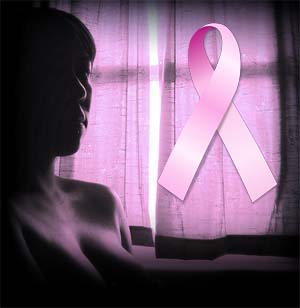
The Pink Ribbon is symbol of Breast Cancer Awareness campaigns


Related Posts Plugin for WordPress, Blogger...